

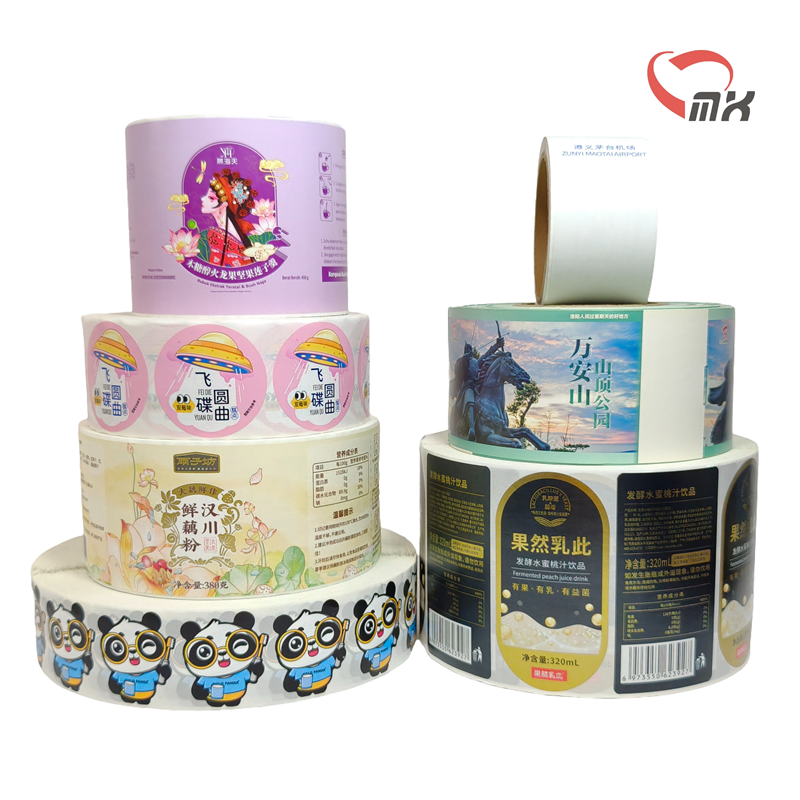
In modern commerce, self-adhesive labels have long transcended the role of simple “price tags” or “instruction stickers,” becoming silent salespeople for products. From a bottle of chilled beverage to a high-end cosmetic, from express delivery slips to outdoor equipment labels, labels convey information and shape an image in their own way. However, faced with a dazzling array of label materials, how do you choose the most suitable one for your application? This requires comprehensive consideration from three dimensions: appearance, environment, and the product being labeled.
I. Appearance First: The “Face” of the Label
The visual effect of the label directly determines the product’s “first impression.” For mineral water or sparkling water, transparent polypropylene (PP) or polyester (PET) film can create a “label-free” transparency, allowing the product itself to take center stage. High-end sugar-free tea or skincare products prefer pearlescent film or synthetic paper, whose warm matte texture significantly enhances the product’s visual appeal. For mass-market daily chemical products, coated paper remains the mainstream choice due to its excellent color reproduction capabilities and cost advantages.
II. Environment Determines Success or Failure: Not Just Aesthetics, But Also Adhesion
The usage environment is crucial for label performance. If your product requires refrigeration or freezing (such as beer or fresh produce), you must use low-temperature adhesives or washable adhesives to ensure it doesn’t peel off at low temperatures and leaves no residue when removed by the consumer. For outdoor equipment or chemicals, PET or synthetic paper materials are needed, as they possess excellent high-temperature resistance, corrosion resistance, and aging resistance, maintaining their integrity even under wind and sun. For electronic products or precision instruments, fragile paper labels offer unique protection against tearing and tampering.
III. Adhesion Surface: Details Determine Success or Failure
The material and shape of the object being labeled are equally important. Smooth glass or metal bottles require extremely high initial tack from the adhesive; while curved surfaces (such as small-diameter bottles) require materials with good stiffness and adaptability to prevent curling. Furthermore, the choice of label backing paper is crucial on high-speed automated production lines. PET backing paper, with its high strength and stability, is better suited to labeling speeds of 50,000-60,000 bottles per hour, preventing tape breakage.
In short, there is no absolute “best” when choosing self-adhesive labels; only the “most suitable” one based on the application scenario. From the product’s material and storage environment to the labeling process, every step deserves careful consideration to ensure that this small label truly fulfills its important function.
Post time: Mar-06-2026