

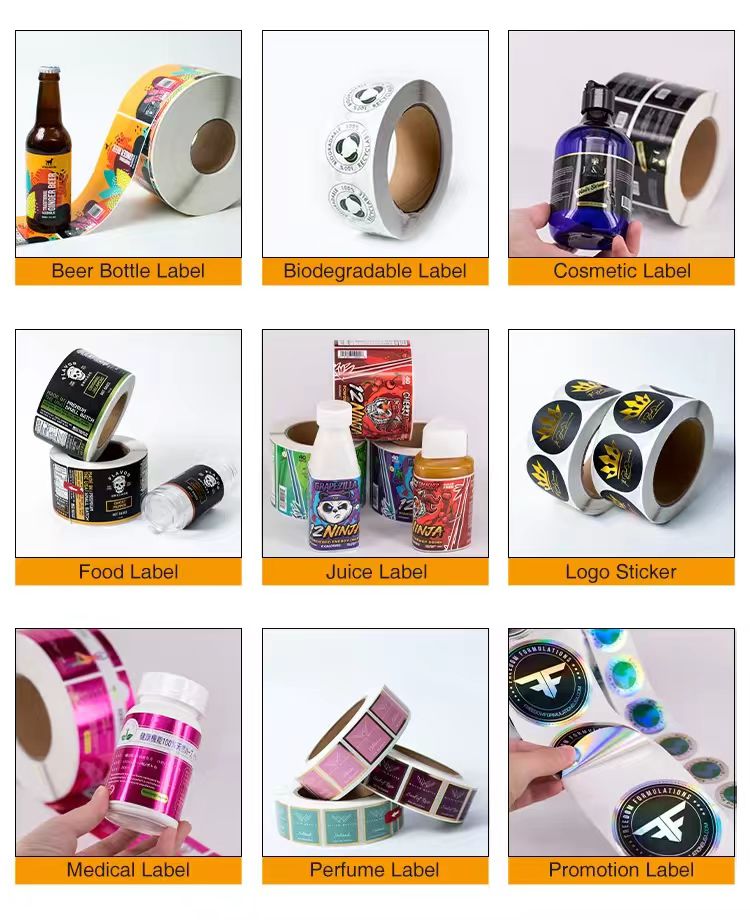
1. Choose the Material Based on the Usage Environment
Indoor Standard Environment: Choose economical coated paper or thermal paper.
Hydraulic Environment: Choose synthetic materials (PET, PVC) with waterproof and oil-proof properties.
Low Temperature Environment: Requires special adhesives to ensure bonding strength.
Durability Requirements: Choose polyester materials that are resistant to high temperatures and chemical corrosion.
2. Choose Based on Shelf Life Requirements
Short-Term Labeling (<6 months): Standard thermal paper.
Medium-Term Shelf Life (6-24 months): Add a protective coating.
Long-Term Archiving: Choose a top-grade thermal coating or consider other printing technologies.
3. According to special functional requirements:
Fragile anti-counterfeiting: Choose fragile paper materials
Removable requirements: Use removable adhesive, leaving no residue
High-strength adhesion: Use permanent strong adhesive
Size Selection Guide: General Standard Sizes
Small Labels: 30×20mm to 50×30mm (Suitable for price tags, small commodity labels)
Medium Labels: 70×50mm to 100×70mm (Logistics waybills, product labels)
Large Labels: 150×100mm and above (Shipping labels, notices)
Customization Considerations:
Content Capacity: Ensure sufficient space for text, barcodes, and graphics
Adhesion Surface: Determine label proportions based on the shape and size of the object to be labeled
Printing Equipment Limitations: Understand the printer’s maximum printing width
Industry Standards: Follow industry-specific standard size requirements
Ease of Use: Consider the ease of labeling for operators.
Post time: Jan-15-2026